


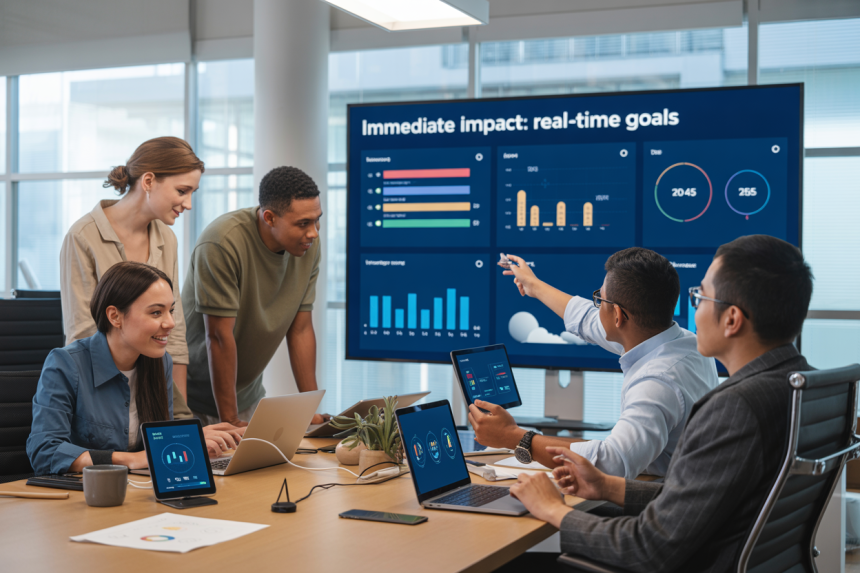
Immediate Impact: Goal Setting in Real-Time
Real-time goal setting transforms how busy professionals achieve results. For managers, entrepreneurs, and productivity enthusiasts who need quick wins without lengthy planning sessions, this approach creates momentum through immediate action. We’ll explore how the 5-minute goal revolution can jumpstart your productivity and show you practical technologies that make tracking progress effortless. Plus, you’ll discover strategies for implementing real-time goals across teams to boost collaboration and accountability.
Understanding Real-Time Goal Setting
Why traditional goal frameworks fall short
Most goal-setting frameworks are dinosaurs. They were designed for a world that no longer exists – one where things moved slowly and predictably.
SMART goals? They’re gathering dust. OKRs? Often too rigid for today’s pace.
The problem isn’t that these frameworks don’t work at all – they just operate on timelines that feel disconnected from reality. When you set a quarterly goal, your brain doesn’t get that little hit of dopamine until… sometime next quarter? Maybe?

By then, you’ve either forgotten why you cared or the landscape has completely changed.
Traditional frameworks also fail because they:
- Create artificial timeframes unrelated to the actual work
- Delay feedback until it’s too late to course-correct
- Emphasize planning over adapting
- Ignore how our brains actually process achievement
The neuroscience behind immediate feedback loops
Your brain craves instant results. Not tomorrow, not next week – right now.

When you accomplish something and receive immediate feedback, your brain releases dopamine. This isn’t just a nice feeling – it’s literally rewiring your neural pathways to seek that experience again.
Quick feedback creates tighter connections between actions and rewards. The shorter this gap, the stronger the association becomes in your brain.
Think about video games. They’re designed around micro-achievements and instant feedback. Complete a level? Immediate points. Defeat an enemy? Instant power-up. This isn’t accidental – it’s deliberately engineered to keep you engaged.
How rapid goal cycles increase motivation
Motivation isn’t a personality trait – it’s a response to environment and structure.
Short goal cycles create a continuous stream of wins. Instead of one big goal three months away, imagine hitting 30 smaller goals along the path. Each success builds momentum for the next.
What happens when you shift from quarterly goals to weekly or even daily targets?

- You stay focused on what matters right now
- Failures become learning opportunities, not catastrophes
- Procrastination decreases when deadlines are imminent
- Progress becomes visible and tangible
- Your motivation refreshes with each small victory
The power of rapid cycles isn’t just psychological – it’s practical. When you complete goals frequently, you get better at estimating what you can accomplish. You learn your actual capacity rather than your imagined one.
The 5-Minute Goal Revolution

A. Setting meaningful micro-goals
You don’t need two hours to set a goal that matters. Five minutes is all it takes.
Micro-goals are tiny, specific targets you can hit today – not next month or “someday.” Think “write 100 words” instead of “finish my novel.”
What makes a micro-goal meaningful? It connects to something bigger you care about. Ask yourself:
- Can I complete this in under 30 minutes?
- Will finishing this give me a genuine sense of progress?
- Does it move me toward my bigger vision?
The magic happens when you stack these tiny goals. They build momentum that bigger goals simply can’t.
B. Tracking progress in real-time
Gone are the days of quarterly reviews. Real winners track their progress hourly.
Pull out your phone and set a timer for 25 minutes. Work on your micro-goal until it beeps. Then mark it done – right then and there.
Apps like Toggl, Forest, and Strides make this dead simple. But a simple notebook works too. The key is immediacy:
- Track the moment you finish
- Note how long it actually took
- Rate your focus level (1-5)
This instant feedback loop rewires your brain to crave completion rather than distraction.
C. Celebrating small wins immediately
Most people save celebrations for the big stuff. Big mistake.
Your brain needs that dopamine hit now, not later. When you knock out a micro-goal, take 30 seconds to:
- Stand up and stretch
- Send a quick “done!” text to your accountability buddy
- Do a ridiculous victory dance (when no one’s looking)
These mini-celebrations aren’t silly – they’re scientifically proven to build motivation. The faster the reward follows the action, the stronger the connection grows.
D. Adjusting targets on the fly
Rigid goals are dead goals.
Notice your 15-minute writing goal consistently takes 25? Update it now, not tomorrow. Hitting a target too easily? Make it harder immediately.
Real-time adjustment keeps you in that sweet spot between boredom and anxiety – what psychologists call “flow.” This is where productivity explodes.
The 5-minute goal revolution isn’t about perfection. It’s about rapid iteration, instant feedback, and continuous progress.
Technologies That Enable Immediate Goal Tracking
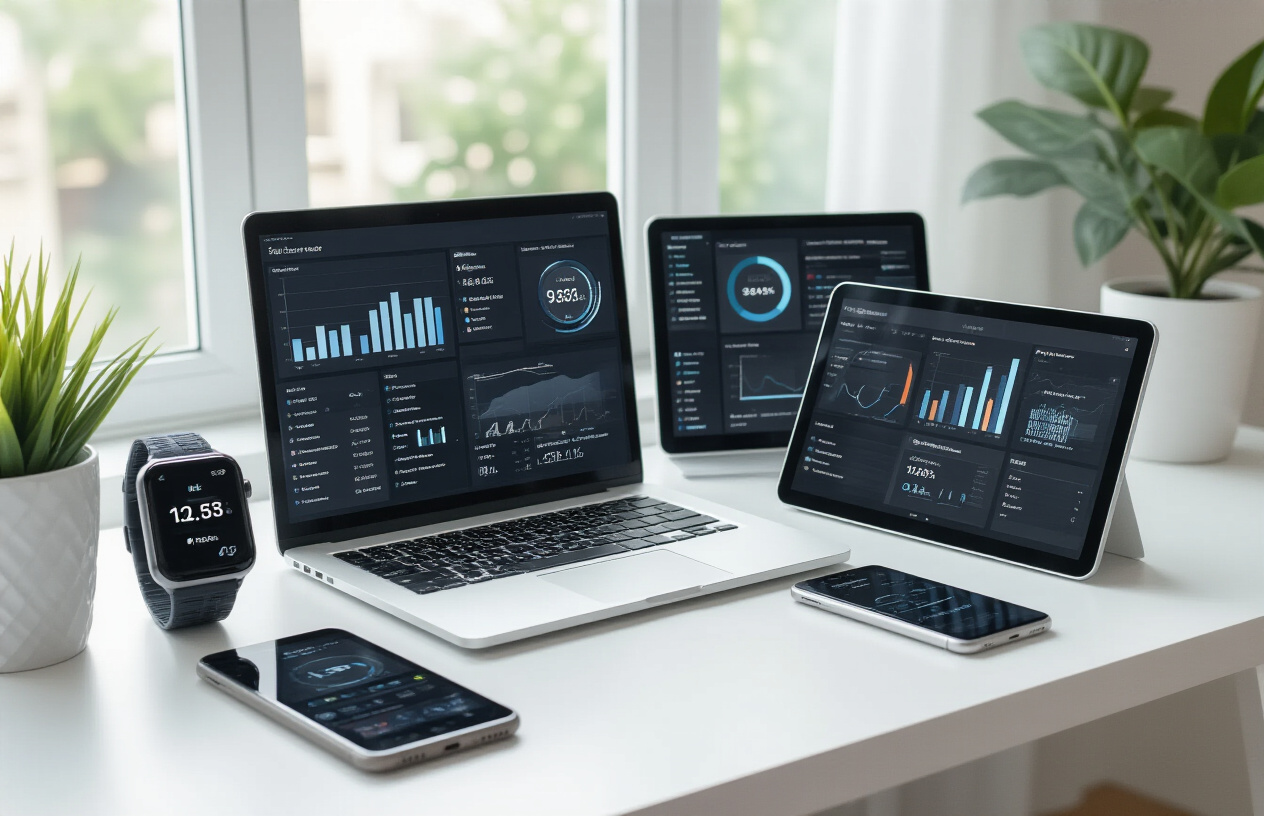
Mobile apps for instant progress monitoring
Gone are the days of waiting weeks to see if your goals are on track. The real magic happens when you can check your progress while waiting for coffee.
Take fitness apps like Strava or Nike Run Club. They don’t just track your run – they show your pace, calories, and distance in real-time. That immediate feedback loop is addictive.
Financial goals? Apps like Mint or YNAB update your spending patterns instantly. Spend too much on lunch, and you’ll know it before dinner.
What makes these apps stick is their simplicity. Nobody wants to navigate through seventeen screens just to see if they’ve hit their daily step count.
Wearable tech that provides real-time feedback
Your watch is no longer just telling time – it’s telling you to move your butt.
Apple Watch taps your wrist when you’ve been sitting too long. Oura Ring tracks your sleep quality while you’re dreaming. Whoop monitors your recovery as it happens.
The game-changer? You don’t have to do anything. These devices passively collect data while you live your life.
Smart notifications that keep you on track
The ping that actually matters – that’s what smart notifications offer.
The best goal-tracking systems don’t bombard you. They intervene at critical moments: “You’re about to exceed your daily calorie goal” or “You’ve been productive for 50 minutes, time for a break.”
These aren’t random interruptions. They’re contextual nudges that appear exactly when you need them.
Real-Time Goal Setting for Teams

A. Creating shared dashboards for instant visibility
The power of shared dashboards? Game-changing. When everyone can see the same numbers in real-time, magic happens.
Think about it – your sales team closes a deal and boom! The dashboard updates and everyone celebrates together. No more waiting for Friday reports or monthly reviews.
I recommend tools like Trello, Asana, or Monday.com that offer visual progress bars showing exactly where each goal stands. The key is simplicity – use color coding (red, yellow, green) so anyone can glance and understand.
One team I worked with put large screens in common areas displaying live goal progress. People actually started hanging out there during coffee breaks, discussing how to move numbers forward. Spontaneous collaboration – that’s the gold.
B. Implementing daily stand-up meetings for goal alignment
Daily stand-ups work because they’re brief and focused. Fifteen minutes max. Any longer and you’re just having another boring meeting.
The format is dead simple:
- What did you accomplish yesterday?
- What will you do today?
- Any blockers?
The beauty is how this creates a rhythm of daily achievements. When someone says “Today I’m going to finish that client proposal,” they’ve made a public commitment.
Make stand-ups actually stand-up (when in-person). People talk faster standing, and it prevents meetings from dragging. For remote teams, use a timer visible to everyone.
Some teams add a quick celebration moment – 30 seconds to recognize someone who crushed a goal yesterday. This tiny ritual builds momentum like nothing else.
C. Using collaborative tools for synchronized progress
The right tools make real-time goal setting feel like everyone’s playing the same game, not working on separate puzzles.
Slack channels dedicated to specific goals work wonders. Create a #q3-sales-target or #website-launch channel where updates, questions, and wins all live in one stream.
Google Docs with comment features let teams build strategies together. I’ve seen marketing teams craft campaigns where people jump in, add ideas, and refine in real-time – cutting weeks off planning time.
For metrics-heavy goals, tools like Databox or Klipfolio that connect directly to your data sources are gold. When someone asks “where do we stand?” nobody needs to run reports – just share a link.
The best part? These tools create a persistent, searchable record of how goals evolved, what worked, and what didn’t.
D. Building a culture of immediate accountability
Accountability doesn’t have to feel like punishment. The best teams crave it.
Start with public commitments. When team members verbalize exactly what they’ll deliver and by when, something shifts psychologically. They own it.
Create a “blocker removal” system where anyone can flag obstacles without blame. The focus stays on solving problems, not finding fault.
Try this: end each week with a five-minute team huddle where everyone shares one promise kept and one missed. No excuses allowed for misses – just what they learned and how they’ll adjust.
What kills accountability? Delayed feedback. When someone misses a target and hears about it two weeks later, the moment’s gone. Real accountability happens in real-time.
E. Providing instant peer recognition
Forget annual awards. They’re dinosaurs. Real recognition happens in the moment.
Set up digital high-five systems using Slack integrations like HeyTaco or Bonusly where peers can instantly reward great work with points or virtual tacos.
The psychology here is powerful – getting recognized by peers often means more than manager praise. It creates this web of mutual appreciation that strengthens teams.
One tech company I know installed a “goal gong” that anyone could strike when hitting a target. Sounds silly? Their goal completion rate jumped 34% the month they installed it.
Make recognition specific and connected to goals: “Thanks for finishing that client presentation three days early – you just helped us hit our Q3 pitch target!”
Overcoming Obstacles in Real-Time

Handling unexpected setbacks without losing momentum
Goals don’t care about your perfect plans. They’ll throw curveballs when you least expect them.
The secret? Don’t freeze up. When something goes sideways, take a quick breath and ask: “What’s one small action I can take right now?”
I had a client who was building an online course when her website crashed two days before launch. Instead of panicking, she pivoted to email delivery while her site was being fixed. She actually ended up with more sales because the personal touch resonated with her audience.
Quick fixes for common setbacks:
- Tech failure? Find the simplest alternative that works now
- Time crunch? Break your next step into 10-minute micro-tasks
- Energy crash? Switch to a different part of your goal that requires less brainpower
Avoiding the perfectionism trap
Perfectionism is real-time goal setting’s worst enemy. Period.
When you’re working in short cycles, done beats perfect every single time. That report you’re endlessly tweaking? It’s probably good enough right now.
Try this: set a timer for 25 minutes and commit to shipping whatever you’ve got when it rings. You’ll be shocked at how often “good enough” actually exceeds expectations.
Maintaining focus during rapid goal cycles
Your brain loves to wander. Especially when you’re working in short bursts.
The trick is creating what I call “focus triggers” – simple cues that snap your brain back to the task:
- A specific playlist that signals “work time”
- A physical object on your desk that represents your goal
- A sticky note with just three words: “One thing now”
When distractions hit (and they will), don’t fight them directly. Just gently redirect back to your focus trigger.
Case Studies: Immediate Impact in Action

How tech startups use hourly sprints for product development
Forget those month-long development cycles. The most innovative startups I’ve seen are crushing it with hourly sprints.
Take Fastlane Technologies, who turned their product roadmap upside down with “60-minute missions.” Their team breaks complex features into tiny tasks that must be completed within an hour. The result? They shipped their MVP in just 9 days instead of the projected 6 weeks.
Their CTO told me, “We don’t have time to overthink things. Each hour has a clear deliverable. When the timer dings, you commit your code or share your progress.”
Another example is PixelPush, a design tool startup. They use a technique called “rapid hourly prototyping” where designers and developers pair up for alternating 60-minute blocks. In the morning standup, they decide on 3-4 features to tackle that day, then it’s all hourly checkpoints from there.
As their founder says, “The energy is totally different when you’re working against the clock. People get focused in a way that just doesn’t happen with two-week sprints.”
Sales teams transforming results with daily targets
The old quarterly sales goals are dead. At least that’s what the numbers show at companies using daily micro-targets.
BlueWave Insurance flipped their entire sales approach by breaking annual quotas into daily action metrics. Each rep starts the morning knowing exactly what their “daily winning number” is—whether that’s 35 calls, 12 demos, or 3 closes.
Their sales director explained it perfectly: “My team used to stress about hitting huge monthly numbers. Now they just focus on today’s small win. Hit today’s number, go home happy. Do it again tomorrow.”
Velocity Media Group took this even further by creating a “Power Hour” system. Sales reps set a 60-minute goal—like booking 5 meetings—and track progress on a shared dashboard. When someone hits their hourly goal, the whole floor knows it.
“It’s like micro-dosing success,” their VP of Sales told me. “Instead of waiting weeks to feel accomplished, my team gets that winning feeling multiple times per day.”
The numbers don’t lie. Teams using daily targets report 34% higher close rates and significantly lower burnout than those working with traditional quarterly goals.
Personal transformation through minute-by-minute habit tracking
Want to know why most personal goals fail? They’re too big and too far away.
James, a former procrastinator turned productivity coach, transformed his life using what he calls the “60-second check-in.” Using a simple timer app, he gets a notification every hour asking one question: “Did you spend the last 60 minutes intentionally?”
“It sounds simple, but that tiny accountability moment changed everything,” James shared. “I went from writing maybe 200 words a day to finishing my book in 30 days.”
Sarah, a fitness instructor, applied this to her clients through “micro-movement tracking.” Instead of intimidating her clients with hour-long workout sessions, she has them track 2-minute movement breaks every 30 minutes throughout the day.
“People who couldn’t stick to exercise for years are now moving consistently because it never feels overwhelming,” she explained. “It’s just two minutes, right now.”
The science backs this up. Studies show our brains respond more powerfully to immediate feedback than distant rewards. When you track progress in real-time, the motivation centers in your brain light up immediately, creating a reward loop that makes consistency almost automatic.

The journey of immediate goal setting offers a powerful pathway to transform your aspirations into tangible achievements. By embracing the 5-Minute Goal Revolution, leveraging tracking technologies, and implementing real-time approaches for teams, you can create momentum that propels both personal and professional growth. As we’ve seen through various case studies, the impact of setting and monitoring goals in real-time is not just theoretical—it delivers concrete results even when facing obstacles.
Take the first step today by selecting one area of your life where immediate goal setting could make a difference. Whether it’s utilizing a new tracking app, implementing quick team check-ins, or simply dedicating five minutes to clarify your next objective, remember that success doesn’t require months of planning. Sometimes the most significant changes begin with small actions taken right now, in real-time, creating immediate impact that ripples through every aspect of your life.