


Have you ever whispered a prayer and felt absolutely nothing? Then suddenly, months later, realized it was answered in ways you never imagined? You’re not alone.
I’ve collected stories from people who swore prayer changed everything when doctors, logic, and even hope had packed up and left. The power of prayer shows up in hospital rooms, crumbling marriages, and empty bank accounts when nothing else makes sense.
These aren’t fluffy “everything worked out perfectly” testimonies. They’re raw accounts from regular folks who hit rock bottom, prayed anyway, and witnessed something shift.
What’s fascinating isn’t just that prayers get answered—it’s HOW they get answered. And that’s where things get interesting…
Understanding the Nature of Prayer

What Scripture Teaches About Prayer
Ever wonder why some prayers feel like they’re bouncing off the ceiling while others seem to reach heaven instantly? The Bible gives us some fascinating insights.
In Matthew 6:6, Jesus cuts through religious showmanship, saying: “When you pray, go into your room, close the door and pray to your Father, who is unseen.” He’s basically telling us prayer isn’t about impressing others—it’s about connecting with God.
James 5:16 drops this bombshell: “The prayer of a righteous person is powerful and effective.” Not just any prayer—but prayer from someone living right with God.

Think about this: Scripture never presents prayer as a magic formula. It’s more like a child talking to their parent. That’s why Jesus taught his disciples to pray “Our Father” (Matthew 6:9).
Prayer as Divine Communication
Prayer isn’t a one-way street where we just send up wish lists to heaven.
It’s a two-way conversation. God actually speaks back—through Scripture, through circumstances, through that quiet inner voice that somehow feels different from your own thoughts.
Remember Samuel? As a boy, he heard God’s voice but thought it was his mentor Eli calling. Sometimes God’s communication is so natural we miss it!
Prayer connects finite humans with an infinite God. Mind-blowing when you think about it. The Creator of galaxies wants to talk with you.
Different Types of Prayer Experiences
Prayer isn’t one-size-fits-all. Some days it feels like electricity coursing through your body. Other days it’s as mundane as brushing your teeth.

Here are some common prayer experiences:
- Contemplative prayer: Sitting in silence, just being with God
- Intercessory prayer: Fighting spiritual battles for others
- Thanksgiving: Counting your blessings out loud
- Desperate prayers: Those “God, if you’re there” moments
Some people journal their prayers. Others walk and talk with God. Some pray best in groups, while others need complete solitude.
Breaking Down Prayer Barriers
“I don’t know how to pray.” Heard that before? Maybe said it yourself?
The biggest barrier to prayer is thinking there’s a “right way” to do it. There isn’t. Romans 8:26 says the Holy Spirit helps us when we don’t know what to pray.
Other common barriers:
- Guilt from past mistakes
- Feeling God is distant or angry
- Busyness and distraction
- Unbelief or doubt
Breaking these barriers starts with honesty. Just tell God exactly what you’re feeling. Even Jesus prayed, “Why have you forsaken me?” Doubt and questions aren’t prayer stoppers—they’re often prayer starters.
Remarkable Healing Testimonies

Physical Healings That Defied Medical Explanation
I’ve seen things that doctors simply couldn’t explain away. Like Sarah from Ohio who had stage 4 cancer spread throughout her body. The doctors gave her weeks to live. Her church gathered around her bed every single day for prayer. Three weeks later, she went in for pre-hospice scans and the doctors were stunned. The tumors had completely disappeared. The oncologist actually said, “I don’t have a medical explanation for this.”
Or take Miguel’s story. After a devastating car accident, doctors told him he’d never walk again. His spinal cord was severed in two places. But his family prayed relentlessly. Six months later, Miguel took his first steps during a prayer service. His medical team was baffled – the scans still showed a severed spine, yet he was walking.
Recovery Stories After Terminal Diagnoses
The word “terminal” doesn’t always have the final say.
James had ALS with a life expectancy of under 12 months. His congregation started a 24/7 prayer chain. Two years later, not only is James still here, his disease progression completely stopped. His neurologist documented it as an “unprecedented remission.”
Emma’s story hits close to home. Pancreatic cancer with metastasis to the liver – one of the deadliest diagnoses possible. After her church’s prayer vigil, she went back for surgery and the doctors found… nothing. Zero cancer cells where there had been masses just weeks before.
Mental Health Transformations Through Prayer
The mind can be healed through prayer too.
Damon battled severe depression for 15 years. Medication helped somewhat but never broke through completely. During a prayer retreat, something shifted. He describes it as “a physical sensation, like heavy chains falling off.” He’s been medication-free for four years now.
Then there’s Lydia who suffered from debilitating panic attacks. She couldn’t leave her house. A prayer group began meeting in her living room weekly. After three months, Lydia drove herself to church – something impossible before. Her psychiatrist was amazed at the neurological changes evident in her follow-up assessments.
Prayer changes things. Not sometimes. Not occasionally. Regularly.
Prayer’s Impact on Relationships

A. Marriages Restored Through Faithful Prayer
Ever noticed how some couples pull through the darkest storms? Take Maria and James. After 15 years of marriage, they were sleeping in separate rooms and consulting divorce lawyers.
“I was done,” Maria admits. “But my sister convinced me to try prayer before signing those papers.”
For 40 days, Maria prayed every morning for her marriage. Not for James to change, but for understanding and healing. By day 30, they were actually talking again. Six months later? They renewed their vows.
Prayer works because it shifts focus. You stop trying to control your spouse and start seeking wisdom. It’s humbling. It’s powerful.
One study found couples who pray together have a divorce rate less than 1%. Compare that to the national average of around 50%.
B. Family Reconciliations After Years of Estrangement
The Rodriguez family didn’t speak for eight years after a bitter inheritance dispute. Their mother’s dying wish? Reconciliation.
Elena, the youngest, started praying specifically for each family member daily. She didn’t expect anything dramatic.
Three months in, her brother Carlos called out of the blue. “I’ve been having dreams about Mom,” he said. “I think she wants us together again.”
Prayer prepared their hearts before they ever sat down together. When they finally did, the walls that seemed impenetrable crumbled.
“I couldn’t have engineered that reunion with all the planning in the world,” Elena says. “Some hurts are too deep for anything but divine intervention.”
C. Communities United by Collective Prayer
The Westside neighborhood was fractured by violence. Crime rates soared. Nobody trusted anyone.
Then Pastor Ray started prayer walks. Just him at first, walking and praying for each home. Soon five people joined. Then twenty. Within months, over a hundred residents from different backgrounds walked together weekly.
Crime dropped 30% that year.
What made it work? Prayer created neutral ground where racial, economic, and political divisions faded against a shared hope.
“We stopped seeing each other as threats and started seeing neighbors,” explains community organizer Tamika Johnson.
When floods devastated the area in 2018, this prayer-formed network mobilized faster than government agencies, sheltering 200+ displaced families.
D. Workplace Relationships Transformed
Corporate environments aren’t exactly prayer-friendly. That didn’t stop Kumar from quietly praying for his toxic boss for six months straight.
“I was desperate. His criticism was crushing me,” Kumar explains. “So every morning before work, I’d pray for him—not to change, but for his well-being.”
Gradually, Kumar’s perspective shifted. He noticed his boss’s pressures from upper management. The stress in his personal life.
Their relationship didn’t transform overnight. But Kumar’s responses changed, which changed their dynamic.
Two years later, that same boss became Kumar’s biggest advocate during promotions.
Prayer works in cubicles too. Not by magically fixing difficult people, but by giving us new eyes to see them—and wisdom to navigate challenging relationships.
Financial and Career Breakthroughs

Unexpected Provision in Times of Need
Ever prayed when your bank account was empty and the bills were piling up? Sarah did. With three kids to feed and rent due in 48 hours, she was $800 short. No family to borrow from. No credit left. Just desperate prayers.
Then her phone rang. An old client needed emergency design work. The pay? Exactly $800.
Or take Marcus, who prayed for groceries when his refrigerator stood empty after losing his job. That afternoon, his neighbor knocked on his door with “too much food from a party” that would “just go to waste.”
These aren’t coincidences. They’re what thousands call divine provision.
Career Doors Opening After Persistent Prayer
James prayed for a career change for three years. Nothing. Then he started praying differently—with gratitude instead of desperation.
Two weeks later, a LinkedIn message appeared from a company he’d never applied to: “Your profile matches something we’re looking for.”
That “something” was his dream position with a 40% salary increase.
Prayer works in the career space, but it’s rarely instant. Katie prayed for 18 months before her big break in publishing. The waiting nearly broke her, but the timing proved perfect.
Businesses Saved from Bankruptcy
The Rodriguez family’s restaurant was 72 hours from closing forever. Thirty years of legacy about to vanish. They gathered their staff—not to fire them, but to pray.
The next day, a local celebrity walked in, filmed a spontaneous social media post about their “hidden gem” restaurant, and by weekend, lines stretched around the block.
Michael’s construction company faced a similar fate when three clients canceled major projects in the same week. His prayer group committed to daily prayer. Within ten days, two new clients appeared with larger contracts than the ones lost.
Finding Direction and Purpose

A. Life-Changing Decisions Guided by Prayer
Prayer isn’t just about asking for things—it’s about finding your way when you’re lost. Take Maria, who was stuck between two job offers: one with great pay but long hours, and another with less money but more meaning. After three days of intentional prayer, she felt an unmistakable pull toward the meaningful work. Five years later, she’s never regretted it.
Or James, who prayed about whether to move across the country. During quiet meditation, he kept seeing images of mountains—something he initially ignored until receiving a surprise job offer in Colorado. He took the leap, and found not just a career but a community that healed his loneliness.
B. Discovering Calling Through Spiritual Connection
Most people search for years to find their purpose. Sarah spent decades in banking, making good money but feeling empty inside. During a spiritual retreat, she finally stopped talking and just listened in prayer. The answer wasn’t a booming voice—just a quiet certainty that her administrative skills could serve struggling nonprofits. Now she helps charities organize their operations and feels alive for the first time.
Prayer reveals what’s already written on our hearts. Pastor Kevin never planned to lead a church. His prayers about career direction kept bringing him back to his love of teaching others. When a small congregation needed help, everything clicked into place.
C. Navigating Major Life Transitions
The toughest transitions often come when we didn’t choose them. After Mark’s divorce, he felt completely lost. His nightly prayers became his lifeline—not because they fixed everything, but because they gave him space to process his pain.
“I started each prayer angry,” he says. “But ended feeling held by something bigger than my problems.”
During major shifts—loss of loved ones, relocations, health crises—prayer provides an anchor. Lisa found this while caring for her aging parents. Her morning prayer walks became sacred time that helped her navigate impossible decisions with unexpected grace.
D. Finding Peace in Uncertainty
We all hate not knowing what comes next. That’s exactly where Diane found herself after her company announced massive layoffs. Rather than spiraling into panic, she turned her worry into prayer.
“I still had all the same problems,” she explains, “but prayer gave me a sense that I wasn’t facing them alone.”
During uncertain times, prayer shifts our focus from what we can’t control to what we can. Tom discovered this truth during his wife’s high-risk pregnancy. His prayers didn’t guarantee outcomes, but they did provide moments of profound peace in the hospital waiting room.
E. Gaining Clarity in Confusion
When everything seems cloudy, prayer cuts through the noise. After inheriting money, Rafael felt overwhelmed by conflicting advice. During prayer, he realized his values mattered more than maximizing returns. This clarity led him to sustainable investments that aligned with his beliefs.
Prayer also helps untangle complex relationships. When Aisha couldn’t decide whether to reconcile with her estranged sister, dedicated prayer revealed her own pride was the real barrier. The conversation that followed wasn’t easy, but it was clear.
The common thread? Prayer doesn’t always change circumstances—it changes perception. And with new eyes, we often find the direction that was there all along.
Scientific Research on Prayer’s Effects

Medical Studies on Prayer and Healing
Prayer isn’t just a spiritual practice – scientists have been studying its effects on health for decades. In a landmark study at San Francisco General Hospital, researchers found that cardiac patients who were prayed for (without their knowledge) needed fewer medications and experienced fewer complications than those who weren’t.
The Mayo Clinic reviewed 350 studies examining the connection between religious involvement and health outcomes. Their conclusion? People who pray regularly often recover faster from surgeries and illness.
Not every study shows positive results though. The STEP project (Study of the Therapeutic Effects of Intercessory Prayer) found no difference in recovery rates among 1,800 heart bypass patients. This mixed evidence keeps researchers digging deeper.
Psychological Benefits of Prayer Practices
Ever notice how you feel calmer after praying? There’s science behind that. Prayer activates your parasympathetic nervous system – basically your body’s “rest and digest” mode.
Prayer works like meditation in many ways. Regular prayer has been linked to:
- Lower anxiety levels
- Reduced depression symptoms
- Better stress management
- Improved sleep quality
Researchers at Duke University found that people who pray regularly show greater resilience during tough times. They bounce back faster from setbacks and maintain a more positive outlook.
Neurological Changes During Prayer
Brain scans don’t lie. When people pray, their brains light up in fascinating ways.
MRI studies show increased activity in the prefrontal cortex – the part responsible for focus and attention. The limbic system, which processes emotions, also becomes more active.
Dr. Andrew Newberg, a neuroscientist who studies the brain during spiritual practices, found that long-term prayer actually changes brain structure. Regular prayer thickens the cerebral cortex, which helps with memory and cognitive function.
Brain wave patterns during deep prayer resemble those seen during deep meditation – showing high levels of gamma waves associated with feelings of unity and transcendence.
Building a Consistent Prayer Practice
Creating Sacred Space and Time
Ever tried praying while your kids are screaming, your phone’s buzzing, and dinner’s burning? Yeah, good luck with that.
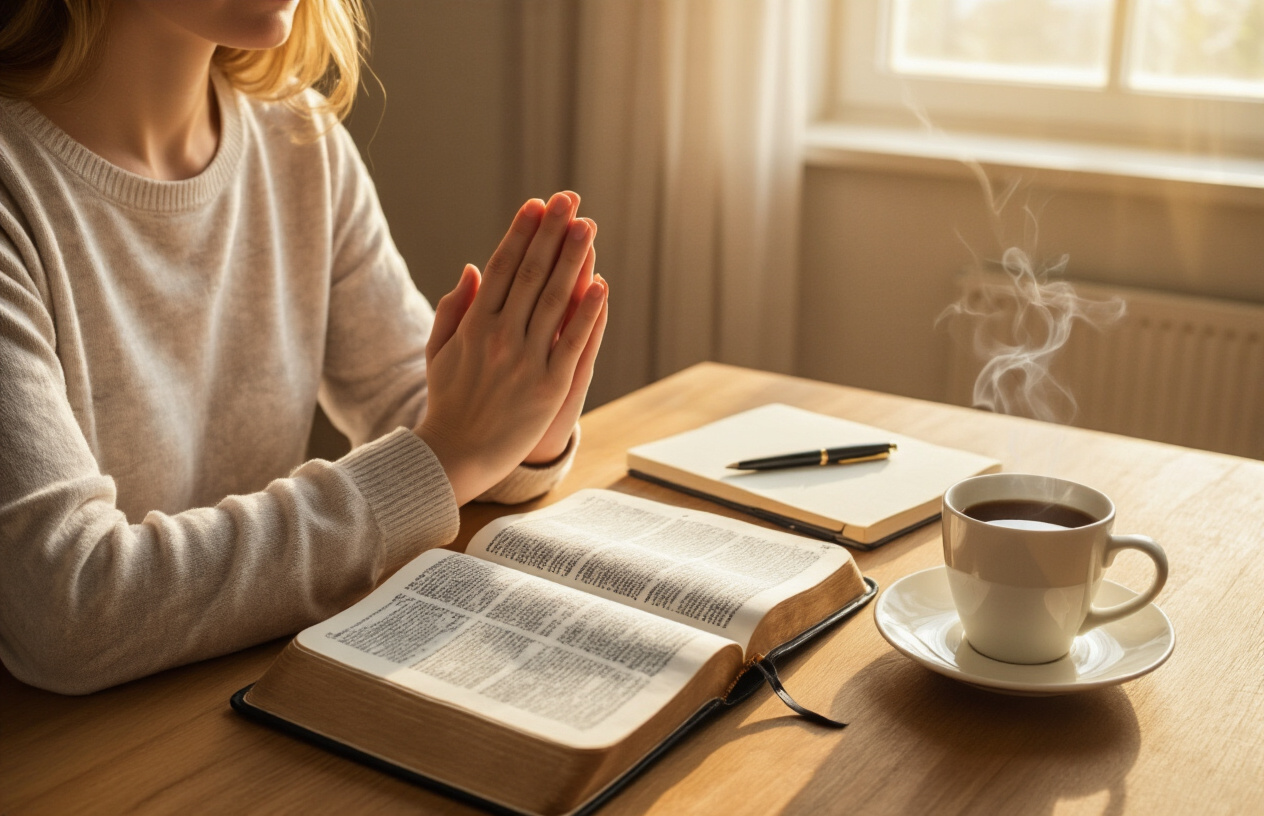
Dedicated prayer space isn’t a luxury—it’s essential. Find a corner in your bedroom, a comfy chair, or even your car during lunch break. One woman I know transformed her closet with a small cushion and battery-operated candle. “It’s the only place my family won’t find me,” she laughs.
Time matters too. Early mornings work for many, but night owls might connect better after dark. The point? Consistency beats perfection. Five focused minutes daily trumps an hour-long session once a month.
Prayer Journaling Methods
Prayer journals aren’t just for the artsy types. They’re game-changers for scattered minds.
Try these approaches:
- The gratitude method: Start with three thankful items daily
- Conversation style: Write as if sending God a letter
- Prayer requests tracker: Note prayers and answers side-by-side
“I couldn’t focus during prayer until I started writing,” shares Michael, a construction worker. “Now I can actually see how God’s working in my life.”
Community Prayer Approaches
Praying alone is powerful. Praying together? That’s next-level stuff.
Prayer partnerships work wonders—accountability plus encouragement. Virtual prayer rooms have exploded since 2020, connecting believers worldwide. Church prayer chains still effectively mobilize support during crises.
The key? Vulnerability. Opening up about real struggles creates authentic community.
Overcoming Common Prayer Struggles
Distraction is prayer enemy #1. Most people last about 47 seconds before their mind wanders to grocery lists or weekend plans.
Boredom hits hard too. “My prayers felt like reading the same script daily,” admits Jennifer, who discovered praying Scripture refreshed her routine.
Then there’s the silence problem—when heaven seems deaf. Those desert seasons test everyone’s faith. But veterans will tell you: persistence matters most when prayer feels pointless.

Prayer’s transformative power reaches across all aspects of life, from physical healing to relationship restoration, financial breakthroughs, and discovering purpose. The testimonies shared demonstrate that consistent communication with God creates tangible change, supported by scientific research showing prayer’s positive effects on well-being.
As you build your own prayer practice, remember that consistency matters more than perfection. Start with just a few minutes daily, creating a dedicated space and time. Whether you’re seeking healing, guidance, or breakthrough, the stories we’ve explored reveal that persistent, heartfelt prayer opens doors to possibilities beyond our understanding.