

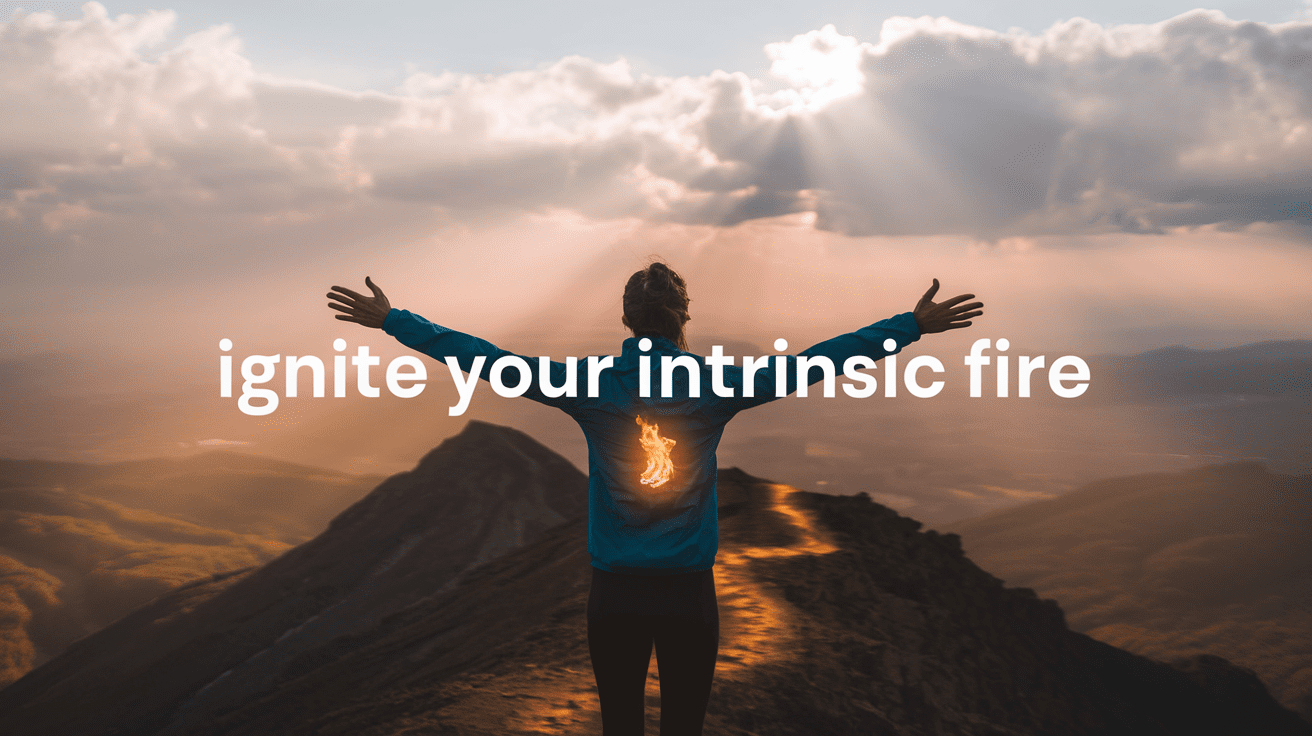

Unleashing Your Intrinsic Motivation
Ever caught yourself dreading a task you once loved? You’re not alone. 70% of professionals report feeling unmotivated at least once weekly, despite being passionate about their field.
- Understanding Intrinsic Motivation
- The Science Behind Self-Driven Action
- How Intrinsic Differs from Extrinsic Motivation
- Why Internal Drive Creates Lasting Results
- Identifying Your Core Motivational Triggers
- Overcoming Motivational Barriers
- Practical Strategies to Ignite Your Internal Fire
- Sustaining Motivation for Long-Term Success
Let me guess—you’ve tried the productivity hacks, the reward systems, the accountability partners. But nothing sticks.
By the end of this guide, you’ll understand how to tap into intrinsic motivation that doesn’t fizzle out when the novelty wears off.
The difference between people who maintain long-term drive and those who don’t isn’t willpower or discipline—it’s knowing how to ignite the fire within.
But here’s the question nobody’s asking: What if everything you’ve been taught about motivation is actually working against your brain’s natural wiring?
Understanding Intrinsic Motivation

The Science Behind Self-Driven Action
Ever wonder why some people jump out of bed excited to work on their passion projects while others need an alarm clock orchestra? It’s all in your brain chemistry. When you’re doing something you genuinely love, your body releases dopamine – that feel-good neurotransmitter that makes you want to keep going.
Scientists have found that intrinsically motivated activities activate the reward pathways in your brain differently than external rewards do. Your brain essentially becomes its own cheerleader, creating a positive feedback loop that makes the activity itself rewarding.
This isn’t just psychological mumbo-jumbo. Studies using fMRI scans show distinct neural patterns when people engage in activities they find inherently satisfying versus those they do for external gain. The anterior insular cortex lights up like a Christmas tree when you’re doing something because you want to, not because someone’s dangling a carrot.
How Intrinsic Differs from Extrinsic Motivation
Think of extrinsic motivation as that carrot on a stick – money, praise, or avoiding punishment. It works, but only for a while.
Intrinsic motivation? That’s the fire in your belly. It’s showing up because something matters to you, not because there’s a gold star waiting.
Here’s the real difference:
| Intrinsic Motivation | Extrinsic Motivation |
|---|---|
| Comes from within | Relies on external factors |
| Persists without rewards | Fades when rewards stop |
| Creates deeper satisfaction | Often leads to burnout |
| Fuels creativity | Can stifle innovation |
| You’d do it for free | You’re watching the clock |
When you’re extrinsically motivated, you’re constantly asking “what’s in it for me?” With intrinsic motivation, you’re too busy enjoying the journey to ask.
Why Internal Drive Creates Lasting Results
The magic of intrinsic motivation isn’t just that it feels better – it actually produces better outcomes.
When you’re driven from within, obstacles become challenges rather than roadblocks. You develop grit. You experiment more freely. You take smart risks instead of playing it safe.
The research backs this up. People working from internal drive show greater persistence, higher quality work, and more creative solutions than those motivated purely by external factors.
Think about it: marathon runners don’t endure those grueling miles just for a participation medal. Musicians don’t practice for hours daily just for applause. They’re chasing something deeper – mastery, purpose, the pure joy of doing.
Your internal drive creates a sustainable energy source that doesn’t burn out when things get tough. It’s why passion projects often outlast obligatory ones, even with less time invested.
Identifying Your Core Motivational Triggers

Discovering Your Passion Points
Ever wondered why some activities light you up while others drain your energy? That’s your internal motivation system speaking.
Your passion points are those activities that don’t feel like work—they’re what you’d do even if nobody paid you. When you’re genuinely passionate about something, motivation follows naturally.
Try this: grab a notebook and jot down moments from the past month when you felt genuinely excited. Was it solving a complex problem? Creating something with your hands? Helping someone overcome a challenge? These clues reveal what truly drives you.
Most people miss their passion points because they’re too busy chasing what others think they should want. Break that cycle.
Aligning Activities with Personal Values
Your values are your internal compass. When your daily actions align with what you deeply believe in, motivation skyrockets.
Ask yourself: “What matters most to me?” Maybe it’s creativity, honesty, adventure, or connection. Now examine your calendar—does how you spend your time reflect these values?
The motivation gap happens when we live in conflict with our core values. That promotion might look great on paper, but if it forces you to compromise what you stand for, your motivation will eventually crash.
Recognizing When You’re in a Flow State
You know that feeling when you’re so absorbed in something that hours fly by? That’s flow—the sweet spot of intrinsic motivation.
Flow happens when:
- You’re challenged just enough (not bored, not overwhelmed)
- You have clear goals
- You receive immediate feedback
- You’re fully present
These moments aren’t accidents. They’re signposts pointing to activities that naturally motivate you. Pay attention to them.
Track when you enter flow states. Is it when you’re problem-solving? Creating? Teaching others? This awareness becomes your motivation roadmap.
The Role of Purpose in Sustained Motivation
Purpose is motivation’s secret weapon. When you connect your daily actions to something bigger than yourself, even mundane tasks become meaningful.
Your purpose doesn’t have to be saving humanity (though it could be). It might be raising confident children, creating beauty in your corner of the world, or solving problems that matter to you.
Without purpose, motivation becomes a constant struggle—you’re always pushing yourself forward. With purpose, you’re pulled toward what matters.
Try the “future you” exercise: Imagine yourself in 10 years looking back. What contribution would make you proud? That’s your purpose calling.
Overcoming Motivational Barriers

A. Recognizing and Addressing Limiting Beliefs
Ever catch yourself thinking “I’m just not motivated enough” or “I can’t stick with anything”? Those are limiting beliefs in action – and they’re motivation killers.
These mental roadblocks convince you that you lack what it takes before you even start. The truth? They’re just stories you’ve told yourself so many times they feel like facts.
Start by noticing when these thoughts pop up. Write them down. Then ask: “Is this actually true? Or have I just accepted it?” For each limiting belief, create a counterargument based on evidence from your life.
Remember that time you pushed through exhaustion to finish that project? Or when you kept going despite feeling like quitting? Those moments prove your limiting beliefs wrong.
B. Breaking Through Procrastination Patterns
Procrastination isn’t about laziness – it’s about emotional regulation. We delay tasks that make us feel uncomfortable, anxious, or bored.
The five-minute trick works wonders here. Tell yourself you’ll work on the dreaded task for just five minutes. That’s it. Once you start, the momentum often carries you forward.
Another approach? Shrink the task. Make it ridiculously small. Don’t write a report – just write the title. Don’t clean the garage – just organize one shelf.
Procrastination also feeds on perfectionism. Release the need to do things flawlessly. Done is better than perfect.
C. Developing Resilience During Motivational Dips
Motivation naturally fluctuates – that’s not failure, it’s being human.
When motivation dips, reconnect with your “why.” Not your surface-level why, but the deeper reason behind your goals. Are you learning Spanish to travel, or to connect with a part of your heritage? The deeper your why, the more resilient your motivation.
Create a “motivation emergency kit” – a collection of quotes, pictures, songs, or memories that reignite your fire when it dims. Make this accessible for low moments.
Tracking progress, even tiny wins, builds momentum during slumps. Your brain loves evidence of forward movement, no matter how small.
D. Creating an Environment That Supports Internal Drive
Your environment shapes your motivation more than you think. Physical clutter creates mental clutter that drains your drive.
Design your space to reduce friction for important activities. Want to read more? Keep books visible everywhere. Need to exercise? Sleep in your workout clothes if that helps.
Digital environment matters too. Notifications constantly pulling your attention are motivation vampires. Schedule focused blocks with your phone in another room.
The people around you affect your motivation immensely. Spend more time with those who energize your goals and less with those who drain them. Sometimes the most supportive thing you can do is create distance from negative influences.
E. Managing Energy Instead of Just Time
Traditional time management fails because it ignores a crucial truth: not all hours are created equal.
Your energy fluctuates throughout the day. Identify your peak energy windows and protect them fiercely for your most important work. For many, mornings offer clear thinking before decision fatigue sets in. Others find their flow state in evening hours.
Energy management means working with your natural rhythms rather than fighting them. Match high-energy tasks to high-energy times, and lower-energy tasks to your natural dips.
Physical energy underpins everything. The basics matter more than sophisticated motivation hacks: adequate sleep, proper nutrition, movement throughout the day, and stress management create the foundation for sustainable drive.
When you feel unmotivated, ask: “Am I truly unmotivated, or just depleted?” Often, what looks like motivation problems are actually energy problems in disguise.
Practical Strategies to Ignite Your Internal Fire

Setting Intrinsically Rewarding Goals
Ever notice how some tasks just fly by while others drag on forever? That’s the magic of intrinsic motivation at work. When you set goals that actually matter to you – not just what you think should matter – everything changes.
Start by asking yourself: “What would I work on even if nobody was watching?” Your answer reveals what truly drives you from within.
Try this quick exercise:
- Write down three goals you’re currently pursuing
- For each, ask “Why am I really doing this?”
- If your answer includes “because I should” or “to impress others,” rethink it
The best goals connect directly to your values. They feel meaningful even without external rewards or recognition. They’re challenging enough to be interesting but not so difficult they crush your spirit.
Building Sustainable Motivation Habits
Motivation isn’t something that magically appears when you need it. It’s something you cultivate daily through small, consistent actions.
The secret? Link your motivation to existing routines. Want to write more? Do it right after your morning coffee when your mind is fresh. Need to exercise regularly? Put your workout clothes next to your bed the night before.
What kills motivation faster than anything? Perfectionism. Give yourself permission to show up imperfectly. Starting is always harder than continuing.
Try the two-minute rule: commit to just two minutes of any challenging task. Once you start, continuing becomes much easier.
Using Visualization Techniques for Motivation
Your brain doesn’t always distinguish between what you vividly imagine and what you actually experience. Use this to your advantage.
Before tackling something difficult, close your eyes and imagine:
- How you’ll feel after completing it
- The specific steps you’ll take
- Obstacles you might face and how you’ll overcome them
This isn’t just feel-good nonsense. Olympic athletes, successful entrepreneurs, and top performers across fields use visualization to prime their brains for success.
The key difference between effective visualization and daydreaming? Specificity and emotion. Feel the pride, relief, or satisfaction in advance.
The Power of Meaningful Challenges
We’re wired to grow through challenges. Too easy? Boredom sets in. Too hard? Anxiety takes over.
The sweet spot – what psychologists call “flow” – happens when you’re stretched just beyond your comfort zone. That’s where motivation thrives.
Create challenges that:
- Push your boundaries without breaking you
- Provide quick feedback so you can adjust
- Allow some autonomy in how you approach them
Remember that motivation follows action, not the other way around. Don’t wait to feel motivated – create motivation by taking that first small step.
Sustaining Motivation for Long-Term Success

Creating Personal Motivation Rituals
Ever notice how some days your motivation just clicks? That’s not random. The most consistently motivated people have personal rituals that prime their mental engines.
Start small. Maybe it’s a five-minute morning meditation, a power playlist for your commute, or writing three things you’re excited about today. The ritual itself matters less than its consistency.
One client of mine reads one page from her favorite self-help book before starting work. Another steps outside and takes ten deep breaths. These tiny actions work because they create a psychological switch that says, “Now it’s time to bring my best self.”
Your ritual should feel good—not another chore on your to-do list. Experiment until you find what clicks for you.
Tracking Progress Without Killing Passion
Nothing drains motivation faster than obsessing over metrics while missing the experience. But flying blind isn’t great either.
Try this approach instead:
- Choose just 1-2 meaningful indicators to track
- Set specific times to review them (weekly/monthly)
- During all other times, focus entirely on the process
The magic happens when you measure enough to see patterns but not so much that you become a slave to numbers. Some of my most motivated clients use a simple journal rather than complex tracking apps—they jot quick notes about what felt good and what worked.
Building a Community of Supportive Connections
Motivation isn’t a solo sport. The people around you either fuel your fire or slowly extinguish it.
Look for these three types of connections:
- Mirrors: People on similar journeys who understand your struggles
- Mentors: Those who’ve walked your path and can share wisdom
- Cheerleaders: Folks who genuinely celebrate your wins, no matter how small
What’s fascinating is how these relationships create accountability without pressure. When you share your journey with others who get it, you’re not just more likely to show up—you actually want to.
One strategy I love: create a small accountability group where you share weekly wins and challenges. Keep it to 3-5 people max for real connection.
Celebrating Process Over Outcomes
We’ve got this backwards. We throw parties for hitting goals but ignore the daily work that got us there.
The intrinsically motivated person finds ways to celebrate showing up. Did you put in the work today? That deserves recognition, regardless of immediate results.
Try creating micro-celebrations:
- Completing your morning work session
- Sticking with a difficult task when you wanted to quit
- Learning something new, even through failure
These tiny acknowledgments rewire your brain to associate pleasure with the work itself—not just the endpoint.
Evolving Your Motivational Strategy as You Grow
What motivates you today won’t necessarily work next year. As you develop, your motivational needs shift too.
Pay attention to when strategies stop working. That’s not failure—it’s feedback.
Maybe competition motivated you early on, but now you need more meaning. Perhaps external accountability was crucial at first, but now you need more autonomy.
The sustainability secret? Regular reflection. Every quarter, ask yourself: “What’s energizing me lately? What’s draining me?” Then adjust accordingly.
Your motivation strategy should evolve as you do—it’s a living system, not a static formula.

Discovering what truly motivates you from within is the cornerstone of sustainable personal growth and fulfillment. By understanding the nature of intrinsic motivation, identifying your unique motivational triggers, and actively working to overcome barriers, you can tap into a wellspring of energy that doesn’t depend on external rewards. The practical strategies outlined in this post provide you with actionable steps to ignite your internal fire and keep it burning.
Remember that sustaining motivation is a journey, not a destination. By regularly reconnecting with your core values, celebrating small wins, and adjusting your approach when needed, you can maintain your momentum even during challenging times. Start today by implementing just one strategy that resonates with you, and watch as your intrinsic motivation becomes the driving force behind achieving your most meaningful goals.