
Stay Motivated When Progress Feels Slow
When the Grind Feels Invisible: How to Stay Motivated When Progress Is Slow
Every entrepreneur, goal-chaser, and faith-driven builder knows the feeling. You show up consistently. You do the work. You pray over your plans and give your best effort—and then you look up and wonder whether anything is actually moving. Learning how to stay motivated when progress is slow is not a minor skill. It is one of the most important disciplines you will ever develop, and it may be the very thing standing between where you are and where God is calling you to go.
The slow season is real. It is not a sign that you chose the wrong path, that God has forgotten you, or that your efforts are worthless. In most cases, it is a sign that something significant is being built beneath the surface—in you, and through you.
Why Slow Progress Feels So Discouraging
We live in a culture of instant results. Social media feeds us highlight reels of overnight success stories, and it is easy to measure your chapter three against someone else’s chapter twenty. When your hard work produces little visible fruit, the silence can feel like rejection.
But feelings are not always facts. Research from the American Psychological Association consistently shows that resilience—the ability to persist through difficulty—is built through the experience of adversity itself, not around it. Struggle is not an obstacle to growth. It is often the very mechanism of it.
The discomfort you feel in a slow season is not a warning signal to quit. It is frequently a signal that you are in the middle of something meaningful. Understanding that distinction changes everything.
Trusting God in Slow Seasons: A Biblical Perspective
Scripture speaks directly and repeatedly to the experience of waiting. The Psalms are full of writers who cried out in seasons of apparent silence and still chose to hold on. Consider what the prophet Isaiah recorded:
“But they that wait upon the LORD shall renew their strength; they shall mount up with wings as eagles; they shall run, and not be weary; and they shall walk, and not faint.” — Isaiah 40:31 (KJV)
Notice the language: waiting is not passive. Waiting on the Lord is an active posture of trust. It requires decision, discipline, and daily recommitment. Trusting God’s guidance on the journey of faith means believing He is working even when you cannot see the results yet.
God’s timing and our timing are rarely the same. What looks like stagnation from your vantage point may look like preparation from His. Consider that Joseph spent years in a pit and a prison before he stood in the palace. David was anointed king long before he sat on the throne. The slow season was not a detour in their stories. It was the path.
If you are walking through a slow season right now, we encourage you to also read Embracing Trials: Finding Purpose in the Hard Seasons for a deeper exploration of how difficulty shapes destiny.
How to Stay Motivated When Progress Is Slow: A Practical Action Plan
Faith without works is dead, as James reminds us. Spiritual perspective needs practical structure to support it. Here is a concrete plan you can begin applying today.
1. Anchor Yourself to Purpose, Not Just Results
When metrics and milestones disappear, purpose becomes your compass. Write down in clear, specific language why you started. Not what you want to achieve—why it matters. Purpose-driven motivation has a longer shelf life than performance-driven motivation because it does not depend on a scoreboard.
2. Shrink Your Timeframe
If your goal feels massive and the gap between here and there looks enormous, zoom in. What can you do today? This week? Commit to process goals—daily actions you can control—rather than outcome goals that depend on external variables. The principle of systems over goals, widely discussed in behavioral research, supports this approach: falling in love with the daily process is what produces long-term results.
3. Document Every Small Win
Slow progress is still progress. Keep a simple journal or notes app entry where you record every small step forward—a new connection made, a skill improved, a fear faced. Over time this record becomes evidence against discouragement. Our article on building consistency habits for personal growth offers practical structure for making this a daily discipline.
4. Protect Your Mental and Emotional Environment
What you consume shapes what you believe. Limit time on social media feeds that trigger comparison. Invest in content, community, and conversation that builds your faith and your vision. The National Institute of Mental Health emphasizes the impact of environment on mental resilience—your inputs matter as much as your effort.
5. Stay Committed to the Process
Commitment is a decision you renew every morning, not a feeling you wait to find. Read our guide on how to stay committed to your goals for practical strategies to reinforce this decision even when motivation fluctuates.
6. Cultivate a Resilience Mindset
A resilience mindset for entrepreneurs and goal-chasers is not about pretending things are easy. It is about interpreting setbacks as information rather than verdicts. It means asking, “What can I learn from this?” instead of “Why is this happening to me?” For a deeper dive into this posture, explore our piece on cultivating a growth mindset.
7. Practice Biblical Patience
Patience in Scripture is not passive resignation—it is active endurance. The book of James says, “Knowing this, that the trying of your faith worketh patience.” — James 1:3 (KJV). Your slow season is literally working something valuable into your character. Our practical guide to mastering patience can help you make this a lived discipline rather than just a concept.
Reframing the Waiting Period as Preparation
One of the most powerful shifts you can make is to stop viewing your slow season as something to escape and start viewing it as something to steward. Every skill you sharpen now, every habit you build now, every character flaw God is refining in you now—all of it is preparation for what comes next.
Staying consistent when results take time is actually one of the rarest and most valuable qualities a person can develop. The Harvard Business Review’s landmark research on expertise has long highlighted that mastery is built through years of deliberate, often invisible effort—long before recognition arrives.
You are not behind. You are being built. And for more on sustaining that forward energy through every phase, explore our article on unwavering motivation and fueling your success.
A Strong Finish Starts in a Slow Middle
Knowing how to stay motivated when progress is slow is ultimately an act of faith—faith in God’s sovereignty and faith in the process He has set before you. The apostle Paul wrote, “And let us not be weary in well doing: for in due season we shall reap, if we faint not.” — Galatians 6:9 (KJV). That promise does not say the season will be short. It says do not faint. Keep going. The harvest is coming.
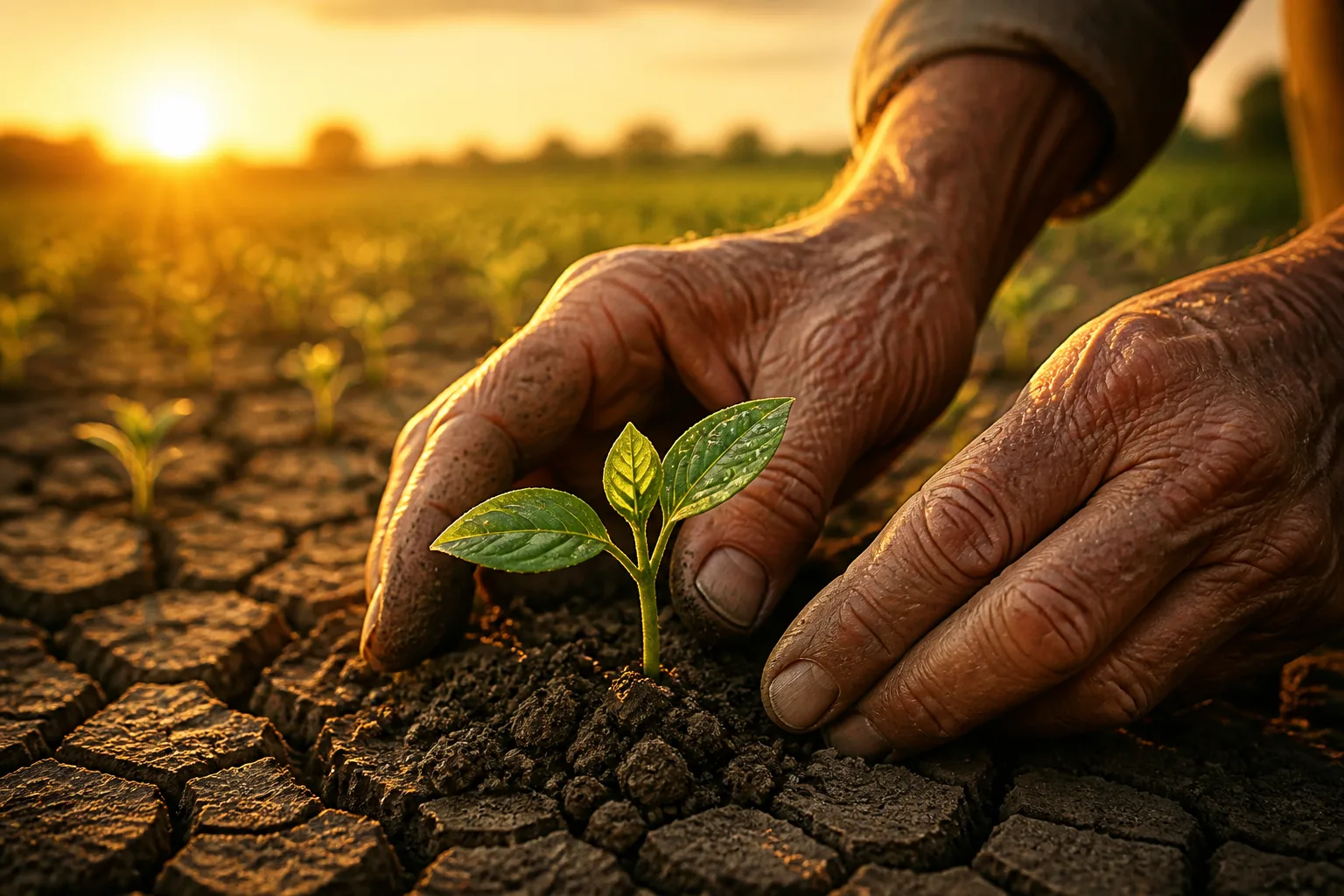
Your slow season is not a failure. It is a foundation. Build on it with intention, trust God with the timeline, and refuse to quit when the work feels invisible. The most important growth often happens underground before it ever shows above the surface.
Frequently Asked Questions
Why does God sometimes allow slow progress in our goals and businesses?
God’s purposes run deeper than our timelines. He is not only interested in what you accomplish—He is deeply invested in who you are becoming in the process. Slow seasons often serve to deepen your dependence on Him, refine your character, build your skill set, and prepare you for a level of responsibility you are not yet ready for. What feels like delay from our perspective is frequently divine preparation from His. The story of Joseph in Genesis illustrates this vividly: every hardship he endured was shaping the leader Egypt would eventually need. Trusting God in slow seasons means believing His wisdom exceeds our understanding, even when we cannot see the full picture.
What practical habits help you stay consistent and motivated when you see no visible results?
Several habits are especially effective during slow seasons. First, anchor your daily routine to process goals—specific actions you can complete regardless of external outcomes. Second, keep a progress journal to document small wins that are easy to overlook. Third, set aside regular time for prayer, reflection, or quiet review of your original vision and purpose. Fourth, limit comparison-triggering environments and invest in communities that encourage growth. Fifth, break large goals into smaller weekly targets to create manageable momentum. Consistency is not glamorous, but it is the engine of every significant achievement. Staying consistent when results take time is a trained discipline, not a personality trait—and it can be developed with the right habits and structures.
How do you mentally reframe a slow season so it strengthens rather than discourages you?
The key is to change the question you are asking. Instead of asking, “Why is nothing working?” try asking, “What is this season developing in me?” That single shift moves you from a victim posture to a learner posture. View every obstacle as data, every delay as preparation, and every quiet day as an opportunity to deepen the roots of your discipline and faith. It also helps to look back regularly at how far you have already come—slow seasons can make us forget the ground we have already covered. A resilience mindset for entrepreneurs and anyone pursuing significant goals is built by choosing this interpretive framework repeatedly, especially when emotions pull in the opposite direction.